Showing posts with label historied. Show all posts

Wednesday, 18 November 2015

Something not so imaginary

  
Imagination is a wonderful thing.  It makes real-life mundane situations way more exciting than they actually are.  Take the picture above, for example. The purpose of taking this picture was to tell a story that was not even happening.   The setting invokes a sense of desolation, isolation and danger.  My posture in the picture suggests that  I am being hunted  and am on the run, or am lost and confused, or was taking an innocent walk when a forest of dead trees suddenly surrounded me, invoked by the dread warlock Horrifus.  In this moment I must gather my resources and wits to secure my survival. I must choose between fight or flight - else all might be lost!
 
Alas, reality was not so interesting.
 
The truth is, I was taking an innocent walk, but with a group of people on the Cabot Trail in Cape Breton Island, Nova Scotia.  We were on the Middlehead trail, taking in fantastic views of the Atlantic ocean when we came upon this forest of dead kindling along our path.  Our steps faltered for a moment as my friend spoke what was on all of our minds, "Now, this is spooky."  Inspired by his statement, I quickly set up my camera, shoved it into his hands and told him to take a picture of me in the trees.  Voila!  Setting captured, story told!
 
Sometimes it makes me sad that reality is not as exciting as our imaginations can be.  That walk we took along Middlehead trail was very pleasant and enjoyable, but nothing as stimulating as being attacked by the dread warlock Horrifus happened on that journey.  Then again, I should be grateful that is the case.  This past week the people of Paris, France went through a situation that I am sure they wish was imaginary - the fodder for action-adventure movies or evocative photographs telling a fictional story.  Seven coordinated terror attacks on French civilians in public places killing 129 people.  Suddenly what was always considered safe was no longer so.  The stories that had been read in news about other people in places like Syria, had suddenly become the people of France's own reality.  The imaginary had come to life.
 
The worst thing about the imaginary becoming real is that the sense of control we had when the event was solely confined to the imagination is lost.  No longer are we able to be fit and mould events into a narrative that leaves us as the heroes of the story.  When the imaginary becomes real, instead of being the heroes, we fall into the role of victims.  Worse, we no longer know what to define as reality, so we begin to accuse innocent people, who are trying to flee a similar terror, of being the same as the terrorists who attacked us.  We try to take control of the story by initiating a counter-attack, becoming aggressors in our own right.  This is not a video game though.  Here counter-attacking means the loss of real lives, sometimes innocent lives.  Even as we take up arms to be the heroes in our own eyes, we become the villans in others.  Reality is not as simple as the imagination and there is no game guide to get us through it. 
 
In our reality the fight or flight response is the natural human reaction to a situation like this.  It takes a lot more imagination to find a positive alternative for our historical narrative. What irony that it is when we can no longer separate the imaginary from reality that we need our collective imaginations more than ever!  This is the time when we all need to individually ask ourselves this question: how do we as a people take control and start shaping a narrative that is actually heroic, where aggression that breeds aggression is no longer a dominant theme in the world story we are telling? 

Friday, 13 November 2015

Something to be remembered

Once when I was in my early 20s and my sister was still in her early teens she came to visit me in Calgary.  I had all sorts of exciting shenanigans planned for her visit, but knowing we couldn't possibly fit them all in I decided to give her the opportunity to choose an activity from among them.

"So, what would you rather do this weekend - ," I asked, "go to the museum or zoo?" Yeah, my shenanigans were that exciting. I had a secret wager with myself that she was going to pick the zoo, after all - cute, cuddly animals that you don't have the opportunity to see every day - how could you not?  In truth I really wanted to go to the museum but I seriously doubted how a feature exhibit on the building the trans-Pacific railway could possibly stimulate a 14 year old brain.  My sister surprised me though when she picked the museum, almost without a second thought.  Oh yeah, I remembered, we are sisters.  Strange things like preferring museums to zoos must run in the family.

When I was travelling in Eastern Canada I had the opportunity to visit my fair share of museums. In fact, at one point in Montreal I reached a point of museum overload when we visited the Place de Calliere, Planetarium, Biodome, Musee de Marguerite Bouregoys, Centre d'Histoire de Montreal, Bank of Montreal money museum, Chateau Ramezay and a few other places I have already forgotten all in the matter of a couple days!  My journal entry from October 1st reads, "Yesterday: too many museums."  That's it.  That's all the energy I had to write!  My brain was so fried that by the time we got to the Musee des Hospitaliares I was doing that thing where you read a sentence, get halfway through and realize you don't have any clue what it is saying so you start reading from the beginning again only to get 1/2 a dozen words in before you realize you can't even recall what they were, so you start again and the vicious cycle repeats itself.  I ended up giving up at that point.  Apparently there can be too much of a good thing.  The good news is: I recovered.  By Ottawa I was prepared to visit museums again, only no more than one a day this time.

The thing about going to so many museums is that you begin to see how they have a tendency to be all the same.  Take First Nations exhibits, for example.  By the end of my trip I was getting seriously annoyed with them.  I voice my frustrations in my journal:
"Canadians seem to think that this is our history, but the truth is that it is us trying to record the vestiges of a dying culture because our ancestors nearly stamped them out of existence.  How many museums have I entered that have told me what the First Nations did, what they wore, how they survived, but have never told me who they were? There is almost never a story of a person, of a soul that represents the soul of his or her people, and that is the real tragedy of these museum exhibits.  History remains a white man thing - with the remnants of the civilizations we have conquered displayed in our halls."
There were exhibits, however, that offered a fresh perspective that I really appreciated.  In the Canadian Museum of History I went through an exhibit entitled "1867: Rebellion and Confederation."  This exhibit told the story of the context surrounding Canada's confederation, about how the American revolution to the south had pushed up the British loyalists who had a superiority complex over the French Acadians and the only reason these two cultures completely at odds with each other came together was because they were worried about being annexed by the States. I found it extraordinarily amusing that the origin of Canadian identity was in the desire to NOT be American.  Despite our close ties to the US today, this one fact remains a pivotal expression of Canadian identity.

What I really pulled away from the 1867 exhibit, however, was the fact that when Canada became a nation, it was in fact not a nation.  People in Canada still thought about themselves as British subjects.  They still carried British Passports.  It wasn't until World War I, as I learned later at the Canadian War Museum, that Canada was recognized on an international stage as its own unique country.  It was because of World War I that Canadians decided to take over their own international affairs, that we began to take pride in saying that we were Canadian and began to seek out symbols of our cultural identity. 

A few days ago we celebrated November 11th, Remembrance Day here in Canada.  That day I had the opportunity to help my church serve coffee and hot chocolate to the hundreds of people who came to participate in the ceremonial process of remembrance and I did not hesitate to take a few pictures.  War is a tragedy.  It has a huge toll in the cost of life that it demands.  And yet, I feel so grateful for those soldiers and people who have represented Canada in war.  At the museums I visited on my trip I learned that the adversity of war is what helped birth our national identity.  We are not a warlike people; we have not sought conflict as the Americans have throughout their revolutionary history.  But it is through the fires of war that we have discovered who we are and what we believe in as a nation.  It is because of the sacrifices of these people that we can have pride in being Canadian.

For that, soldiers and veterans, I thank you.

Wednesday, 11 November 2015

Something political (part 3)

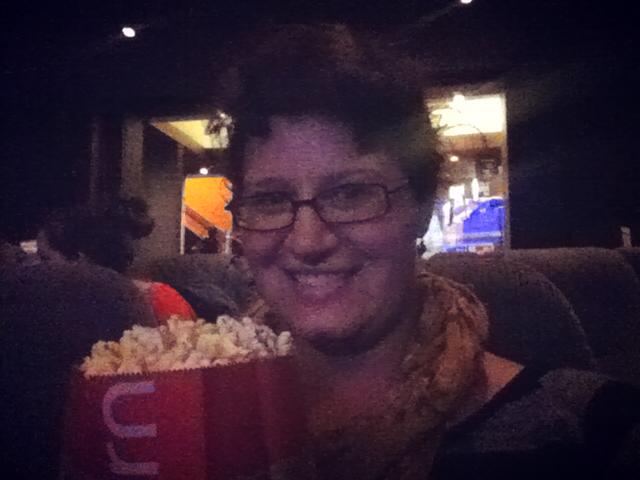
Who knew an election could be so lively? I had never been anywhere public to watch the national election results before, but the hum of energy in the theatre where I am sitting is tangible.  For a moment I regret that I am unable to hear the election coverage commentators over the myriad of conversationally engaged people around me.  But then I realize that not only can I still see the important stuff on the screen, but the ebb and flow of voices from the theatre are providing their own unique commentary. 


IPhone selfie with my popcorn!
The NDP* get a seat! They cheer! *New Democratic Party

The Liberals get a seat!  They cheer!

The Conservatives get a seat!  They boo!

A Conservative cabinet member gets upset!  The Liberal party wins the seat.  They cheer! LOUDLY.

An NDP member gets upset.  The Liberal party wins the seat.  There is a mixture of both disappointment and acceptance.

I take this all in and feel a tickling sense of amusement.  Just by the responses alone it is not hard to tell that I have found myself in the midst of a young vocal university crowd, a demographic that is notorious for being left-leaning.  I suppose it should be no surprise, as the cinema is in the middle of the University district of Toronto, but the unabashed vocal engagement of the crowd gives the sense that we are just as engaged in the results of the federal election as we would be in an epic Canadian hockey game! 

~Cue hockey announcer voice~ "That Liberal came out of nowhere, straight down centre ice.  It's a breakaway!  He shoots, he scores!  It's a Conservative upset!!!!" ~Cue massive fan cheering~ 

Olivia Chow, widow of the late Jack Layton former leader of the NDP, gets defeated.  Suddenly the deafening hum of voices in the theatre go silent all at once.  You could hear a pin drop.  The silence speaks volumes and you feel how stunned, sad and full of respect the population of the theatre is for her.  Coverage switches to show Olivia giving her concession speech and the crowd around me remains silent, listening intently for the duration of the speech.  Then the election results resume, and just as though someone flipped a switch, suddenly the voices pick up where they left off, robust as ever, drowning out the sounds of the television announcers.

It's only about 20 minutes after the polls in Ontario and Quebec when a message flashes across the screen LIBERAL VICTORY.  The voices in the theatre falter and I can hear the announcer on tv saying, "The analysts are calling it a Liberal victory.  The Liberals will be the ones to lead our next government."  Confusion rolls through the stunned theatre.  "What?" I can hear a dozen voices saying, "Isn't it way to soon to be calling this?"  After all, only a handful of ballot boxes in our most populous provinces have been counted.  I myself am skeptical and think that the guy sitting next to me is summarizing the situation perfectly, "Well, they better hope they are right or this is going to be the biggest embarrassment of Canadian news reporting history!"

It turns out the analysts were not wrong.  As the night goes on, the red Liberal wave sweeping the nation become apparent.  It is not even an hour later when the announcers update their announcements.  It will be a Liberal majority and the Conservative party will form the official opposition.  I find myself breathing a sigh of relief at the word "majority".  To me this means that the new government can be effective.  They  don't have to get caught up in trying to negotiate between warring factions, and they will have a chance to prove themselves, 4 years to be exact.  In the meantime Canadians won't have to return to the polls right away and we will have a chance to observe and see whether these politicians will live up to their promises.

The Canadian government before the 2015 election:
Conservatives 166  NDP 103  Liberals 34  Bloc Quebecois 4  Green 1

The Canadian government after the 2015 election:
Liberals 184  Conservatives 99  NDP 44  Bloc Quebecois 10  Green 1
(This is a massive change in government.  The Liberals gained 150 new seats).

As the night concluded and I went back to the hostel dorm to watch the after-election commentary on the internet until 3 in the morning (for the first time on my trip missing my BC time zone which meant I would have gone to sleep at midnight instead of 3am), I had only one thought go through my head:

A new government, a Blue Jays win, and a Star Wars trailer - it was truly a great night to be Canadian!

Canadian Parliament Buildings framed by the Canadian Museum of History


Friday, 6 November 2015

Something trippy

Field trips. What do those two words bring to mind for you?  I think of gold mines, railway museums, and now-abandoned towns full of people pretending that they lived 100 years ago and had just started making a new life on an untamed land. 

Field trips are the educators attempts to remove children from the plain boring history of rote and plunk them down in a setting where the past comes alive for them.  At least that is their hope - that the children will be able to engage with the physical environment in such a way that they realize that the events of the past actually mattered.  Warning: there is more to the world than whatever it passing through your twitter feed right now.

The thing was, I grew up in a place that did not have much history to boast of.  Growing up, my field trips consisted of the incredible unexciting opportunity to go on smelter tours! Woo-hoo.  How many ways can you melt rock?  Or mines: how many ways can you hit a rock?  Or settling a village on the edge of the Rocky Mountains: how long will it take you to grow a garden in a field full of rocks?  Don't mistake my words - I love rocks!  But, there has got to be more to life and history and Canada than rocks.

The first day I arrived in Halifax I immediately became aware of a fundamental shift in the nearness and realness of history.  Instead of a railway museum I walk into a Via Rail station where people can still take the train as a passenger across Canada.  I take a tour of a church where a piece of shrapnel is buried in the wall from an explosion that tore the city apart 100 years ago in the middle of the first World War.  I walk into an old garrison on citadel hill where people dressed up as soldiers tell me how in this place they built this fort to be an impregnable defense for the city against invasion 200 years ago.  I might have had a friend who stuck his head into a cannon from the 1850's. He had the same deprived childhood I had so all this history was very new and exciting. 

Very exciting indeed.

Canada is not a country with much history, but the history we do have is irrevocably rooted to place.  And the places where we Canadians live will ultimately determine the history we know and experience.  It is the places we live that shape who we are, and I don't think one can have a conversation about Canadian spirituality without having a conversation about place and its central importance to our national and personal identities.  The Spanish philosopher Jose Ortega y Gasset wrote "Tell me the landscape in which you live and I will tell you who you are."  That seems like something worth pondering.